
What Is Die Coat? A Comprehensive Guide to Selecting the Right Die Coating


Introduction: Die Coat, the Hidden Link to Quality in Industrial Manufacturing
In metalworking and industrial component manufacturing, the final product quality depends on far more than engineering design and raw material selection. The condition and performance of the interface between the metal and the tooling play a critical role in achieving consistent, high-quality production.
Molds, dies, and metal-forming tools are continuously exposed to extreme temperatures, high mechanical pressures, thermal shocks, and abrasive wear throughout the manufacturing process. These harsh conditions can lead to wear, cracking, metal adhesion, corrosion, and deterioration of surface quality. If left uncontrolled, such issues result in shorter die life, increased scrap rates, and higher production costs.
To overcome these challenges, the use of specialized protective coatings has become essential. Die Coat is one of the most widely used industrial coatings specifically designed to protect molds and metal-forming tools in processes such as die casting, casting, forging, machining, and ingot production. By creating an effective barrier between molten metal or hot workpieces and the die surface, Die Coat helps optimize process control, reduce thermal and mechanical stresses, and maintain superior surface quality.
For this reason, Die Coat is not merely an optional consumable but a technical and economic necessity in modern manufacturing environments. Proper application of these coatings enables manufacturers to achieve more stable, controllable, and cost-effective production processes, ultimately extending die life, reducing maintenance and replacement costs, and improving product quality.
In this article, we provide a comprehensive and technical overview of Die Coat products, including their properties, benefits, applications, and best practices for use across various metalworking industries. By the end, you will gain both an engineering and economic perspective on the importance of Die Coat technology.
What Is Die Coat?
Die Coat is an advanced industrial coating applied to molds, dies, metal-forming tools, and equipment that come into contact with molten metal or high-temperature workpieces. It acts as a protective intermediary layer that prevents direct contact between the metal and the die surface.
Die Coat formulations are specifically engineered to withstand demanding industrial conditions, including:
- Extremely high temperatures
- Severe mechanical pressure
- Continuous abrasion
- Repeated thermal shock
- Corrosion and oxidation
As a result, Die Coat is far more than a simple lubricant; it is a critical component of the manufacturing process that significantly enhances equipment performance and service life.
The Role of Die Coat in Process Optimization
The function of Die Coat extends well beyond die protection. It has a direct impact on product quality, production speed, and process stability.
A properly selected Die Coat helps:
- Regulate heat transfer between the metal and the die
- Reduce friction
- Prevent metal adhesion to the die surface
- Promote more uniform solidification
- Minimize thermal stresses
The result is higher-quality components, lower scrap rates, and extended die life. In other words, die lubricants directly influence production efficiency, repeatability, and overall manufacturing performance.
Contact us for Die Coat pricing and technical consultation.
Benefits of Using Die Coat in Metalworking Processes
Die Coat products are among the key elements in optimizing metalworking operations such as casting (including gravity die casting and high-pressure die casting), forging, extrusion, machining, rolling, and ingot casting.
By forming a protective layer on the die surface, these coatings significantly improve product quality while enhancing thermal control and extending die life. Their widespread use in advanced manufacturing industries stems from the substantial operational and economic benefits they provide.
Improved Surface Finish
Surface quality is one of the most important indicators of manufacturing excellence. By creating a uniform coating layer on the die surface, Die Coat prevents die imperfections from transferring to the finished component.
As a result, parts are produced with smoother surfaces, free from flow marks, stains, and surface irregularities, significantly reducing the need for secondary finishing operations such as polishing and surface treatment.
Reduction of Casting Defects
In casting operations, unstable molten metal flow and sudden temperature variations can cause defects such as:
- Shrinkage cavities
- Flow lines
- Surface porosity
- Rough surface marks
The proper Die Coat formulation minimizes these issues and contributes to defect-free production.
Enhanced Heat Transfer and Solidification Control
Die Coat improves thermal management between molten metal and the die body, resulting in more uniform solidification.
This leads to:
- More consistent metallurgical structures
- Reduced internal stresses
- Prevention of solidification-related cracking
These advantages are particularly valuable when producing sensitive alloys such as aluminum and zinc-based Zamak alloys.
Extended Die Life and Reduced Costs
One of the most significant economic benefits of Die Coat is the extension of die service life.
By protecting die surfaces from thermal wear, temperature shock, corrosion, and repeated exposure to molten metal, Die Coat reduces die degradation and increases the number of production cycles achievable before maintenance or replacement is required.
This translates directly into lower tooling costs and reduced downtime.
Increased Productivity and Faster Production Cycles
Die Coat facilitates easier release of parts from the die cavity, reducing cycle times and improving production efficiency.
Faster demolding means shorter manufacturing cycles and higher overall output.
Reduced Need for Post-Processing
Because Die Coat improves surface quality, secondary operations such as grinding, sanding, and polishing are often minimized or eliminated altogether.
This reduces labor costs, processing time, and overall manufacturing expenses.
Improved Process Stability and Dimensional Accuracy
Die Coat contributes to greater process consistency, enabling the production of parts with excellent repeatability and tighter dimensional tolerances.
This characteristic is particularly important for precision-engineered industrial components.
Potential for Further Process Optimization
When combined with modern technologies such as molten metal flow simulation, intelligent temperature control systems, and real-time process monitoring, Die Coat can further improve manufacturing performance while minimizing waste and maximizing product quality.
Composition and Structure of Die Coat
Die Coat formulations vary depending on application requirements and operating conditions. Selecting the right composition is essential to achieving optimal performance.
Typical Die Coat ingredients include:
Graphite
- Reduces friction
- Enhances lubricity on die surfaces
Ceramic Materials
- Increase thermal resistance
- Improve wear resistance
- Withstand high mechanical loads
Resins and Binders
- Ensure strong adhesion to die surfaces
- Maintain coating integrity during operation
Chemical Additives
- Improve thermal stability
- Prevent oxidation and corrosion
- Enhance chemical resistance
These ingredients may be incorporated into either water-based or oil-based formulations, each offering unique advantages depending on environmental and process requirements.
Advanced formulations may also include nanomaterials and thermal-conductivity modifiers that enable more controlled heat transfer and more uniform metal solidification, thereby improving both part quality and die longevity.
Contact us for Die Coat pricing and technical consultation.
Types of Die Coat and Their Differences
Water-Based Die Coat
Water-based Die Coat products are widely preferred due to their operator safety, environmental friendliness, and ease of application.
They are particularly suitable for modern manufacturing lines and are extensively used in aluminum and Zamak die casting operations.
Oil-Based Die Coat
Oil-based Die Coat products are typically used in specialized industrial environments.
These lubricants provide stronger adhesion and may offer enhanced performance under certain high-temperature conditions. However, they require proper ventilation and adherence to safety regulations.
Graphite-Based Die Coat
Graphite-based formulations are designed for high-pressure and high-temperature applications.
Their superior lubricating properties significantly reduce wear and make them the preferred choice for steel and brass forging operations.
Ceramic-Based Die Coat
Ceramic Die Coat products offer the highest level of thermal resistance.
They are commonly used in steel casting, iron casting, and ingot production processes where extreme operating temperatures demand maximum thermal protection.
Die Coat vs. Conventional Lubricants and Coatings
One of the most common misconceptions is treating Die Coat as simply another lubricant. Conventional lubricants are designed for short-term performance and are primarily used to reduce friction during a specific operation. Die Coat, however, is an engineered protective coating specifically developed for demanding industrial environments, providing long-term protection and process stability.
In manufacturing processes such as die casting and forging, lubricants alone are often insufficient. Die Coat plays a critical role in maintaining process consistency, protecting tooling, and ensuring reliable production performance.
Key Factors in Selecting the Right Die Coat
Choosing the appropriate Die Coat is one of the most important factors in extending die life, improving part surface quality, and reducing overall production costs. Conversely, selecting an unsuitable Die Coat can result in premature die wear, inferior surface finishes, and increased manufacturing expenses.
The optimal Die Coat depends on several technical and operational factors, which are discussed below.
Contact us for a free consultation on selecting the most suitable Die Coat for your process.
1. Type of Industrial Process
Selecting a Die Coat is fundamentally a technical decision that must be based on the thermomechanical conditions of the manufacturing process. Every metalworking operation involves different levels of temperature, pressure, stress, and contact time. Therefore, the coating must be chosen according to these key parameters.
The following sections examine the requirements of various manufacturing processes in greater detail.
1.1 Casting
In casting operations, molten metal comes into direct contact with the mold surface. This direct interaction creates several challenges, including:
- Molten metal adhesion to the mold surface (soldering)
- Thermal shock caused by the temperature difference between the molten metal and the mold
- Oxidation and thermal wear
- Deterioration of part surface quality
The Role of Die Coat in Casting
In casting applications, Die Coat functions as a protective barrier layer that:
- Prevents metallurgical reactions between the molten metal and the mold surface
- Reduces metal adhesion
- Improves surface finish and uniformity
- Extends mold service life
By creating a stable protective interface, Die Coat helps maintain consistent production quality while minimizing tooling damage.
Casting processes are generally divided into two primary categories:
- Gravity Die Casting
- High-Pressure Die Casting (Die Casting)
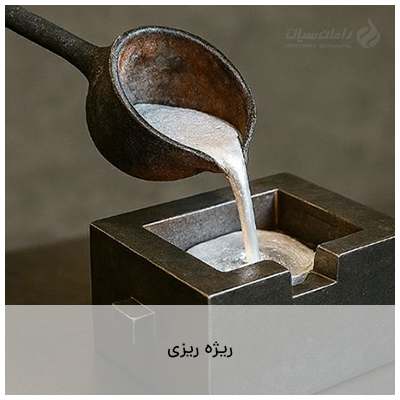
Gravity Die Casting
In gravity die casting, molten metal enters the metallic mold solely under the influence of gravity, without the application of external pressure.
Because filling speeds are relatively lower than in high-pressure die casting, the coating requirements differ. However, effective Die Coat protection remains essential to control heat transfer, prevent metal adhesion, and ensure consistent surface quality throughout production.
Process Characteristics
- Low operating pressure
- Relatively longer metal-to-mold contact time compared to high-pressure die casting
- Moderate thermal shock conditions
Characteristics of a Suitable Die Coat for Gravity Die Casting
An effective Die Coat for gravity die casting should provide:
- Excellent resistance to molten metal adhesion
- Uniform and consistent surface quality on the finished component
- Adequate thermal resistance to withstand repeated heating cycles
Recommended Die Coat
For gravity die casting applications, ceramic-based and graphite-based Die Coat formulations are commonly recommended due to their excellent thermal resistance and reliable protective performance under moderate thermal and mechanical loads.
1.1.2 High-Pressure Die Casting (Die Casting)
Die casting is a manufacturing process in which molten metal is injected into a mold cavity under high pressure. Selecting the appropriate Die Coat for this process is particularly critical because the die is subjected to severe thermal and mechanical stresses throughout production.
The combination of high injection pressure, rapid filling speeds, and repeated thermal cycling places significant demands on both the die and the protective coating. As a result, the chosen Die Coat must be capable of maintaining stable performance under extreme operating conditions while ensuring optimal part quality and extended die life.
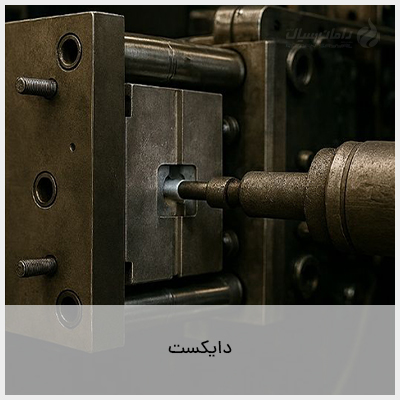
This process is generally divided into two main categories:
A) High-Pressure Die Casting (HPDC)
In High-Pressure Die Casting (HPDC), molten metal is injected into the die cavity at extremely high pressures—typically several hundred bars—and at very high speeds.
Operating Conditions
- Severe thermal shock
- Rapid thermal cycling
- High thermal stresses
- Increased risk of thermal fatigue cracking (Heat Checking)
Characteristics of a Suitable Die Coat for HPDC
An effective Die Coat for HPDC applications should:
- Absorb and mitigate thermal shock
- Reduce the occurrence of heat checking and thermal cracking in the die
- Minimize adhesion of aluminum and zinc alloys to the die surface
- Improve part release and demolding performance
Recommended Die Coat
Water-based Die Coat formulations containing thermally resistant ceramic components are commonly used in HPDC operations. These coatings provide excellent thermal shock resistance while maintaining stable performance throughout repeated production cycles.
B) Low-Pressure Die Casting (LPDC)
In Low-Pressure Die Casting (LPDC), molten metal is introduced into the mold under controlled pressure levels that are significantly lower than those used in HPDC.
Operating Conditions
- Lower thermal shock compared to HPDC
- Longer mold filling times
- Improved control of molten metal flow
Characteristics of a Suitable Die Coat for LPDC
A suitable Die Coat for LPDC should provide:
- Consistent thermal stability
- Effective prevention of metal adhesion
- Preservation of internal and external surface quality
In LPDC applications, the primary focus is less on resistance to extreme thermal shock and more on maintaining long-term thermal stability and coating uniformity throughout the production process.
1.2 Forging
Forging is a manufacturing process in which metal is plastically deformed under extremely high compressive forces to achieve its final or near-net shape.
During forging operations, dies and tooling are exposed to:
- Very high compressive loads
- Significant frictional forces
- Elevated temperatures in many applications
Selecting the appropriate Die Coat for forging is a highly process-dependent engineering decision. The combination of intense pressure and direct contact between the workpiece and the die can lead to severe wear, metal adhesion, and accelerated tool degradation if the coating system is not properly matched to the operating conditions.
Forging processes are generally classified into two primary categories:
A) Hot Forging
In hot forging, the workpiece is heated to a temperature above its recrystallization point before deformation takes place.
This process is widely used for manufacturing components from:
- Steel
- Brass
- Aluminum alloys
- Various superalloys
By deforming the material at elevated temperatures, hot forging enables the production of complex shapes while reducing forming forces and improving the material’s metallurgical properties.

Characteristics of the Hot Forging Process
- High operating temperatures (often exceeding 1,000°C in steel forging applications)
- Extremely high mechanical loads
- Severe friction between the workpiece and the die
- Surface oxidation
- Repeated thermal shock cycles affecting the tooling
Key Challenges in Hot Forging
Hot forging operations present several critical challenges, including:
- Thermal wear of the die surface
- Adhesive wear caused by metal sticking to the die
- Thermal fatigue cracking (Heat Checking)
- Reduced die service life
Characteristics of a Suitable Die Coat for Hot Forging
A Die Coat designed for hot forging applications should provide:
- A low coefficient of friction to facilitate metal flow
- Excellent thermal stability at elevated temperatures
- Resistance to degradation under extreme mechanical pressure
- Effective prevention of metal adhesion to the die surface
- High wear resistance under demanding operating conditions
The primary objective is to protect the die from thermal and mechanical damage while ensuring consistent material flow and high-quality forged components.
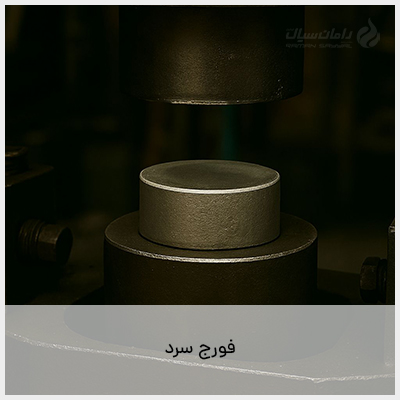
B) Cold Forging
In cold forging, the material is deformed at or near room temperature. This process is commonly used for the production of high-precision components with tight dimensional tolerances, including:
- Bolts and fasteners
- Nuts
- Automotive components
- Precision industrial parts
Although cold forging does not involve elevated temperatures, the process subjects both the workpiece and tooling to extremely high mechanical stresses.
As a result, tool wear, friction, and surface damage remain significant concerns, making proper Die Coat selection essential for maintaining dimensional accuracy, surface quality, and tool longevity.
Characteristics of the Cold Forging Process
- Low processing temperature (close to ambient temperature)
- Very high forming pressure
- Severe frictional conditions
- High sensitivity to surface quality
- Requirement for high dimensional accuracy
Main Challenges
- Adhesive wear (galling)
- Surface scratching of the workpiece
- Increased press force requirements
- Surface damage to the die
Characteristics of a Suitable Die Coating for Cold Forging
In cold forging, the primary focus is on reducing friction and preventing adhesive wear rather than providing thermal resistance.
A suitable die coating should:
- Provide effective lubricating properties
- Remain intact under high-pressure conditions without delamination
- Exhibit strong adhesion to the die surface
- Preserve the surface quality of the forged component
1.3. Extrusion
In the extrusion process, metal is forced through a die under extremely high pressure to produce a specific cross-sectional profile. During this operation, the metal remains in continuous and prolonged contact with the die walls, generating significant compressive and frictional stresses.
Extrusion processes are generally classified into two main categories:
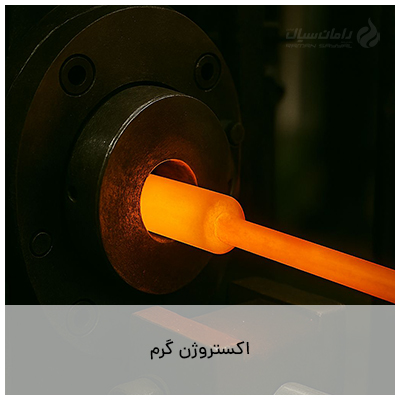
a) Hot Extrusion
In hot extrusion, the metal is heated above its recrystallization temperature and then forced through a die under pressure. This method is widely used for the production of aluminum profiles, steel sections, and copper alloy products.
Characteristics of the Hot Extrusion Process
- High processing temperature
- Extremely high press loads
- Prolonged contact between the metal and die walls
- Severe frictional conditions
- Localized temperature rise in the die exit region
Major Challenges in Hot Extrusion
- Severe die wear
- Metal adhesion to the die surface (pick-up)
- Increased press force requirements
- Deterioration of extrudate surface quality
- Thermal cracking of the die
Characteristics of a Suitable Die Coating for Hot Extrusion
A die coating used in hot extrusion should:
- Possess high thermal resistance
- Withstand severe mechanical loading without degradation
- Reduce the coefficient of friction
- Prevent metal adhesion to the die surface
- Control heat transfer between the workpiece and the die
- Provide excellent wear resistance
b) Cold Extrusion
In cold extrusion, the metal is forced through a die under very high pressure at or near room temperature. This process is commonly employed for the production of precision steel components, automotive parts, and components requiring tight dimensional tolerances.
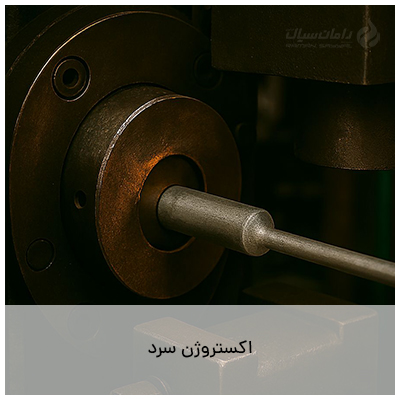
Characteristics of the Cold Extrusion Process
- Low processing temperature
- Extremely high mechanical pressure
- Severe frictional conditions
- Prolonged contact between the metal and die walls
- High sensitivity to dimensional accuracy and surface quality
Major Challenges in Cold Extrusion
- Adhesive wear (galling)
- Surface scratching of the workpiece
- Increased press force requirements
- Damage to the internal surface of the die
Characteristics of a Suitable Die Coating for Cold Extrusion
A suitable die coating for cold extrusion should:
- Minimize the coefficient of friction
- Remain stable under high-pressure conditions
- Prevent the occurrence of galling
- Exhibit adequate adhesion to the die surface
- Preserve the surface quality of the final component
In cold extrusion, the primary objective is to reduce friction and prevent adhesive wear rather than to provide thermal resistance.
1.4. Machining
During the machining of hot workpieces or dies, the cutting tool remains in direct contact with the metallic surface.
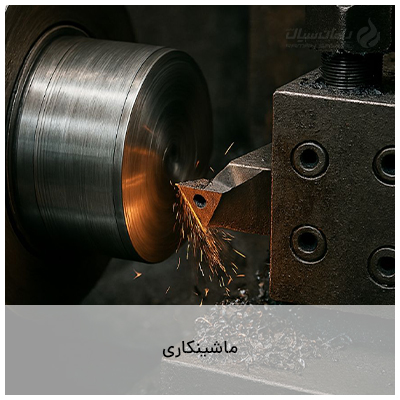
Challenges in the Machining Process
- Tool wear
- Increase in tool temperature
- Adhesion of metal to the cutting edge
Characteristics of a Suitable Die Coating for Machining Operations
A suitable coating for machining applications should:
- Reduce friction
- Lower localized temperatures at the tool–workpiece interface
- Prevent the formation of a built-up edge (BUE)
- Extend tool service life
In machining operations, the primary focus is on lubrication performance and wear reduction.
1.5. Rolling
In the rolling process, hot or cold metal is passed between two or more rolls to reduce its thickness or to achieve the desired cross-sectional profile. During this process, continuous direct contact is established between the metal and the roll surfaces, generating significant compressive and shear stresses.
Rolling processes are generally classified into two main categories:
a) Hot Rolling
In hot rolling, the metal is heated above its recrystallization temperature and subsequently passed through the rolls under pressure. This method is widely used for the production of steel sheets, structural beams, reinforcing bars, and other heavy sections.
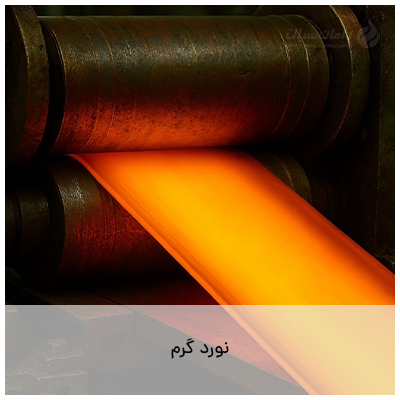
Characteristics of the Hot Rolling Process
- High operating temperatures (typically 900–1200°C for steel)
- Extremely high contact pressures in the roll bite region
- Formation of oxide scale on the metal surface
- Continuous and prolonged contact between the metal and the rolls
- Repeated thermal shocks experienced by the rolls
Major Challenges in Hot Rolling
- Thermal wear of the rolls
- Surface oxidation
- Localized metal adhesion to the roll surface (pick-up)
- Thermal cracking of the roll surface
- Localized temperature rise within the rolling line
Characteristics of a Suitable Die Coating for Hot Rolling
A coating intended for hot rolling applications should:
- Possess excellent high-temperature resistance
- Remain stable under repeated thermal shock conditions
- Provide superior wear resistance
- Prevent metal adhesion to the roll surface
- Effectively control and manage heat transfer
In hot steel rolling, the primary criteria for coating selection are wear resistance and long-term thermal stability.
b) Cold Rolling
In cold rolling, the metal is plastically deformed at or near room temperature. This process is commonly used for the production of precision sheet products, automotive body sheets, aluminum sheets, and other products requiring high surface quality.

Characteristics of the Cold Rolling Process
- Low operating temperature
- Extremely high mechanical pressure
- Precise and controlled surface contact
- Very high sensitivity to surface quality
Major Challenges in Cold Rolling
- Adhesive wear
- Formation of surface scratches or lines
- Increased rolling force
- Reduction in final surface quality
Characteristics of a Suitable Die Coating for Cold Rolling
A suitable coating for cold rolling applications should:
- Reduce the coefficient of friction
- Prevent surface scratching
- Remain stable under high pressure
- Provide adequate adhesion to the roll surface
- Preserve the surface quality of the final sheet product
In cold rolling, the primary focus is on reducing friction and maintaining surface quality rather than providing thermal resistance.
1.6. Ingot Casting
In ingot casting, the mold remains in prolonged contact with molten metal.
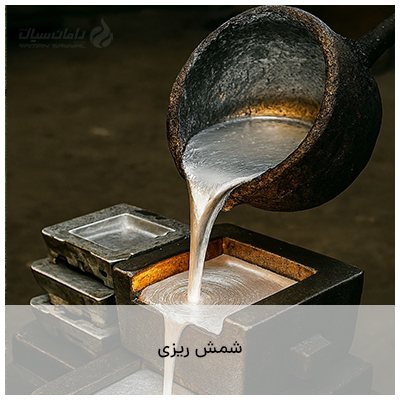
-
Thermal Contact Duration and Conditions
- Long contact time
- Continuous thermal load
- High likelihood of adhesion
Characteristics of a Suitable Die Coating for Ingot Casting
A suitable die coating for ingot casting should:
- Exhibit very high thermal resistance
- Provide chemical stability
- Prevent metal adhesion to the mold (ingot sticking)
- Resist oxidation
A recommended solution: In this process, ceramic-based die coatings with high thermal resistance are typically used.
Technical Summary of Die Coating Selection Based on Process
Type of Metal
One of the most important criteria in selecting a die coating is the type of metal or alloy used in the production process. Each metal has specific metallurgical characteristics such as melting temperature, tendency to adhesion, chemical reactivity, thermal conductivity, and behavior under pressure. These properties directly affect die performance and the required coating type. Improper selection of a compatible coating may lead to issues such as soldering, thermal cracking, severe die wear, poor surface quality, and increased production downtime.
Below, the selection of suitable die coatings for commonly used industrial metals is discussed in detail.
2-1. Suitable Die Coating for Aluminum
Aluminum is one of the most widely used industrial metals; however, its properties make coating selection critical.
2-1-1. Metallurgical Characteristics of Aluminum in Industrial Processes
- High tendency to adhere to steel dies
- High thermal conductivity (rapid heat transfer)
- Relatively low melting point
- Rapid solidification
- Sensitivity to surface quality
Aluminum is widely used in die casting and casting processes, but one of its main challenges is adhesion to die surfaces and formation of built-up layers.
2-1-2. Guidelines for Die Coating Selection for Aluminum
Suitable coatings for aluminum should provide:
- Strong anti-adhesion properties
- Controlled heat transfer
- Uniform die surface coverage
- Formulations containing release agents
In high-pressure aluminum die casting, the coating must also withstand thermal shock.
2-1-3. Recommended Coating Types
- Water-based die coatings (most common choice)
- Lightweight ceramic coatings with thermal shock resistance
- Specialized aluminum die casting coatings
2-2. Suitable Die Coating for Brass
2-2-1. Characteristics of Brass in Industrial Processes
Due to the presence of copper:
- Higher melting temperature than aluminum (increasing thermal load on the die)
- Higher corrosivity
- Greater thermal stress on the die
- Possible oxidation at high temperatures
2-2-2. Guidelines for Coating Selection for Brass
- High thermal resistance
- Chemical stability against copper alloys
- Proper adhesion to the die surface
2-2-3. Recommended Coating Types
- High-temperature resistant ceramic coatings
- Graphite-based coatings for forging applications (where lubrication is critical for reducing friction and wear)
- Oxidation-resistant coatings
2-3. Suitable Die Coating for Zamak
2-3-1. Characteristics of Zamak (Zinc-Based Alloy)
- Low melting point
- High sensitivity to surface quality
- Widely used for precision and decorative die-cast components
2-3-2. Guidelines for Coating Selection for Zamak
- Controlled coating thickness (excess thickness reduces dimensional accuracy)
- Very uniform surface coverage
- No surface defects
- Moderate thermal stability
2-3-3. Recommended Coating Types
- Diluted water-based die coatings with uniform application
2-4. Suitable Die Coating for Steel
2-4-1. Characteristics of Steel in Industrial Processes
Steel is one of the most demanding materials for dies due to:
- Very high operating temperatures (especially in forging)
- Severe mechanical pressure
- High die wear tendency
- Risk of cold welding (adhesive wear)
Steel creates extremely harsh working conditions for tooling, requiring highly engineered coating solutions.
2-4-2. Guidelines for Coating Selection for Steel
- Very high thermal resistance
- Resistance to severe mechanical loading
- Effective lubrication properties
- Strong adhesion to steel dies
2-4-3. Recommended Coating Types
- Heavy graphite coatings for steel forging
- Thermal shock–resistant ceramic coatings for steel casting
- High wear-resistant coatings
In steel forging, friction reduction and load resistance are critical, whereas in steel casting, thermal stability and chemical resistance are more important.
2-5. Suitable Die Coating for Cast Iron
2-5-1. Characteristics of Cast Iron in Industrial Processes
- High melting temperature
- Sensitivity to thermal shock
- Possibility of cracking
- Relatively high wear rate
2-5-2. Guidelines for Coating Selection for Cast Iron
Suitable coatings should:
- Absorb thermal shock
- Prevent adhesion of molten cast iron to the die
- Protect the die surface against wear
2-5-3. Recommended Coating Types
- Ceramic coatings with thermal shock absorption capability
- High oxidation resistance coatings
- Long-term thermal stability coatings
In cast iron ingot casting, high thermal resistance is the most critical requirement.
2-6. Suitable Die Coating for Magnesium
2-6-1. Characteristics of Magnesium in Industrial Processes
- Low melting point
- High chemical reactivity (requiring strong chemical stability in coatings)
- High sensitivity to surface quality
- Widely used for lightweight die-cast components
- Highly reactive and oxidation-prone metal
- Flammability risk under certain conditions
2-6-2. Guidelines for Coating Selection for Magnesium
- High chemical stability
- Resistance to reaction with molten metal
- Strong anti-adhesion properties
- Preservation of surface quality
2-6-3. Recommended Coating Types
- Specialized water-based die coatings
In magnesium die casting, controlling the reaction between molten metal and mold surface is essential to prevent surface defects.
Summary of Die Coating Selection by Metal Type
Main Challenge Recommended Coating Type Metal High adhesion Water-based or lightweight ceramic Aluminum Surface sensitivity Diluted uniform water-based coating Zamak High temperature Ceramic or graphite-based Brass High pressure & temperature Heavy graphite (forging) / ceramic (casting) Steel Thermal shock Thermal shock–resistant ceramic Cast Iron High reactivity Specialized chemically stable water-based coating Magnesium 3. Operating Temperature
Each die coating has a specific thermal stability range. If the process temperature exceeds this limit, the coating structure degrades and loses its protective function.
In metal forming processes, temperatures may vary from a few hundred to over one thousand degrees Celsius. Therefore, coating selection must be based on the maximum operating temperature of the die, not solely on the molten metal temperature.
Effects of High Temperature on Coatings
- Degradation of chemical structure
- Flaking or peeling
- Reduction in anti-adhesion performance
- Increased risk of thermal cracking
Temperature-Based Selection Guidelines
- Medium temperature (Aluminum, Zamak): water-based or lightweight ceramic coatings
- High temperature (Brass, Cast Iron): high-temperature resistant ceramic coatings
- Very high temperature (Steel): graphite-based or advanced ceramic coatings
In high-pressure die casting processes, thermal shock resistance is also critical due to rapid temperature cycling.
4. Mechanical Pressure and Stress
In processes such as forging, extrusion, and high-pressure die casting, the die is subjected to severe compressive and shear stresses. If coating adhesion is insufficient, the coating may detach and lose functionality.
Challenges of High Pressure
- Coating delamination
- Accelerated mechanical wear
- Increased friction
- Die surface damage
Required Properties Under High Pressure
- Strong adhesion to substrate
- High mechanical strength
- Excellent wear resistance
- Stable lubrication under load
For example:
- In steel forging, heavy graphite coatings with strong adhesion are recommended.
- In aluminum high-pressure die casting, coatings must resist both thermal shock and injection pressure.
Under high pressure conditions, coating–substrate bonding strength is critical.
5. Application Method of Die Coating
The final performance of a die coating is highly dependent on its application method. Even the best formulation will not perform properly if applied incorrectly. Therefore, the application method must be selected based on die geometry, component design, and production line conditions. Some coatings are designed specifically for spraying and may not perform effectively in dipping or brushing applications.
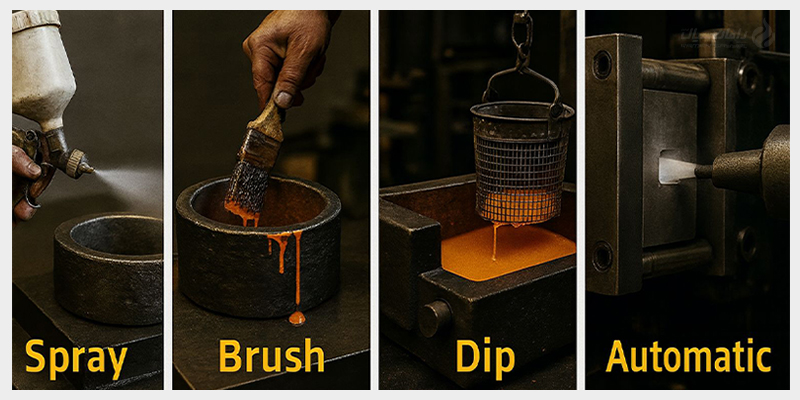
5. Methods of Die Coating Application
The four main methods of applying die coatings are:
5-1. Spray Application
- Suitable for automated production lines
- Ensures uniform coating distribution
- Provides precise control of layer thickness
- High application speed
- Widely used in aluminum and Zamak die casting
In this method, the coating must have appropriate viscosity and good sprayability to ensure uniform coverage.
5-2. Brush Application
- Suitable for localized repair (repair of damaged areas)
- Used for large dies
- Allows manual control of coating thickness
- High precision in specific regions
In this method, the coating must exhibit strong adhesion and good surface coverage capability.
5-3. Dip Coating
- Suitable for small components or dies
- Applicable to simple geometries
- Produces a fully uniform coating layer
- Used in some traditional casting processes
In this case, the coating formulation must have controlled viscosity and regulated drying time.
5-4. Automated Systems
In advanced production lines, robotic systems are used to ensure uniform and repeatable spray application, reducing human error and improving coating quality.
6. Environmental and Safety Requirements
In modern industries, compliance with environmental and occupational safety standards has become a legal requirement. The use of die coatings containing volatile organic compounds (VOCs) can lead to environmental and health concerns.
Advantages of Water-Based Die Coatings
- Reduced VOC emissions
- Improved operator safety
- Compliance with environmental standards
- Lower fire risk
For this reason, water-based coatings have replaced oil-based or solvent-based systems in many advanced industries.
Sustainable Approach to Die Coating Selection
- Use of non-toxic and low-hazard coatings
- Reduction of material consumption
- Extension of die life and reduction of waste
- Compliance with international environmental regulations
Common Mistakes in Die Coating Application
Improper selection or incorrect application of die coatings may lead to various performance issues. The most common mistakes include:
- Selecting a coating without considering the metal type or process
- Applying excessive coating thickness
- Incomplete die surface preparation
- Insufficient drying before process initiation
- Using coatings outside their recommended temperature range
Avoiding these mistakes ensures stable and cost-effective process performance.
Common Problems in Die Coating Use and Their Technical Solutions
Incorrect selection or improper application of die coatings can result in several operational issues. The most important problems, along with their causes and solutions, are discussed below:
1. Coating Flaking (Flaking)
Causes:
- Improper die surface preparation
- Weak coating adhesion
- Surface contamination prior to application
Coating performance depends more on proper surface preparation and process control than on formulation alone.
Solution: Proper Die Surface Preparation
Proper surface preparation is the fundamental step for achieving stable coating performance. Inadequate preparation may lead to:
- Flaking
- Local delamination
- Formation of hot spots
- Reduced die life
- Poor surface quality of the component
Standard Surface Preparation Steps:
Degreasing
Complete removal of oils, lubricants, and contaminants from previous production cycles using suitable solvents or industrial cleaning agents.
Mechanical Cleaning
Removal of residues or hard deposits using brushing, light sandblasting, or fine mechanical tools.
Oxide Removal
In high-temperature dies, oxide layers inevitably form and must be fully removed before coating application to ensure proper adhesion.
Complete Drying
Any residual moisture may cause bubbling, vaporization, or cracking of the coating layer. Therefore, the surface must be completely dry and at the appropriate operating temperature.
2. Die Coating Burnout
Causes:
- Operation outside the recommended temperature range
- Excessive die preheating
- Sudden thermal shock
- Inappropriate coating selection for the alloy
Burnout is typically associated with discoloration of the coating, reduced anti-adhesion properties, and dark spots on the die or part.
Solution: Precise Temperature Control and Proper Material Selection
To prevent coating burnout:
- Follow the manufacturer’s recommended temperature range
- Control die temperature before application using industrial sensors
- Avoid thermal shock during application and operation
- Select coatings compatible with the alloy and process conditions
3. Surface Staining on the Component
Causes:
- Non-uniform coating thickness
- Incomplete drying
- Multiple layers without sufficient evaporation time
Coating thickness directly affects heat transfer, product quality, and die life.
If the coating is too thick:
- Reduced heat transfer
- Increased solidification time
- Surface defects
- Cracking or flaking
If too thin:
- Insufficient protection
- Increased metal adhesion
- Accelerated die wear
Solution: Accurate Thickness Control
- Follow manufacturer guidelines for dilution ratio and application method
- Use calibrated spray systems
- Apply uniform layers with controlled pressure and distance
- Measure coating thickness using industrial inspection tools
Thickness control must always be based on process conditions and manufacturer specifications.
4. Reduction of Anti-Adhesion Performance
Causes:
- Gradual thermal degradation
- Delayed reapplication of coating
- Mechanical wear during production cycles
Die coatings are consumable layers that degrade over time due to thermal and mechanical stresses.
4-1. Coating Renewal Scheduling
Coatings degrade progressively; therefore, periodic renewal is essential.
Indicators for recoating:
- Increased metal adhesion
- Reduced surface quality
- Color change or burning of the coating
- Increased part ejection time
Solution: Preventive Maintenance (PM) Program
- Periodic inspection of coating condition
- Recording of die operating cycles
- Scheduled recoating before complete failure
- Operator training for early detection of degradation
A structured maintenance program prevents unexpected downtime, reduces scrap rates, and improves productivity.
Conclusion
Dies used in processes such as die casting, forging, extrusion, and casting are exposed to extreme thermal loads, mechanical stresses, thermal shocks, and continuous wear. These conditions can lead to problems such as metal adhesion, thermal cracking, corrosion, and ultimately reduced die life.
In such conditions, engineered coatings such as die coatings provide an effective technical solution. By forming a protective layer between molten metal and die surface, direct contact is prevented. This layer reduces friction, controls heat transfer, and promotes more uniform solidification of the metal. As a result, part quality improves, defect rates decrease, and die life is significantly extended. Reduced production downtime and maintenance costs are additional benefits.
The use of die coatings also leads to reduced porosity, improved dimensional repeatability, lower need for post-processing, and easier part ejection, all of which enhance overall production efficiency.
Typical die coating compositions include graphite (for friction reduction), ceramic compounds (for thermal and wear resistance), and resins or chemical additives (for thermal stability and oxidation protection). In modern industries, water-based formulations are increasingly preferred due to environmental and safety considerations.
The selection of an appropriate die coating depends on multiple factors, including process type, metal type, temperature and pressure range, and application method. Additionally, proper surface preparation and coating thickness control are critical to achieving optimal performance.
In conclusion, proper selection and management of die coatings represent a strategic engineering decision that leads to more stable, economical, and higher-quality production, providing a significant competitive advantage for industrial operations.


No comment for this post.