comprehensive introduction to forging die casting extrusion processes and consumable materials
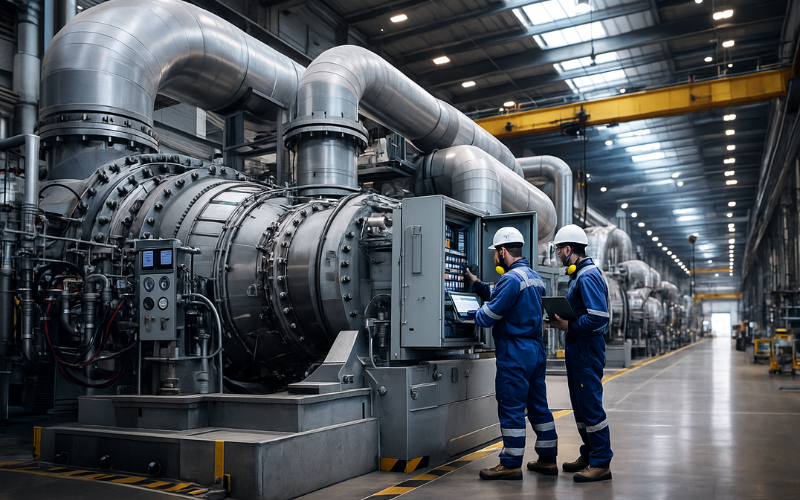

Part One – Forging Process (Industrial Forging)
1. Introduction to Forging: The Oldest and Most Powerful Metal Forming Method
Forging, or industrial forging, is one of the most fundamental and robust methods of producing metal parts. In this process, unlike casting, the metal is not melted; instead, it is brought into its final shape by applying compressive forces (pressure, impact, or pressing). Because the structure of the metal is deformed in the solid state, its mechanical properties become far better and stronger than in many other processes.
Forging has been used for thousands of years, but today, with the help of multi-hundred-ton presses, multi-zone furnaces, and modern equipment, it has become one of the main pillars of producing critical components in industry.
2. Forming Principles in Forging
In forging, the metal is deformed under the following conditions:
-
Application of force in the form of impacts
(for example, air hammers or impact presses) -
Application of a continuous and uniform force
(hydraulic or mechanical presses) -
Application of pressure in hot, warm, or cold conditions
These forces cause plastic deformation of the metal without the internal structure fracturing. This factor leads to high density, high strength, and impact resistance.
3. Types of Forging
3.1 Open-Die Forging
In this method, the metal is placed between two simple metallic surfaces (usually flat or semi-round), and the die does not restrict the final shape of the part. The worker or operator moves the workpiece between the blows until the final shape is obtained.
Advantages:
-
Suitable for large parts
-
High mechanical strength
-
Uniform grain flow
-
Ability to produce special parts without the need for a shaped die
Applications:
Large rings, massive shafts, power plant components, rolls, hammers.
3.2 Closed-Die / Impression-Die Forging
In this method, the die contains the final shape of the part. The metal is placed inside the die cavity and, under pressure, is brought into its final shape.
Advantages:
-
Suitable for mass production
-
High accuracy
-
Ability to produce complex parts
-
Excellent strength
Applications:
Gears, bushings, automotive fittings, aerospace components.
3.3 Hot, Warm, and Cold Forging
Hot Forging
The metal is heated to above its recrystallization temperature.
Suitable for hard alloys or large parts.
Warm Forging
Lower temperature than hot forging; lower energy consumption; better dimensional control.
Cold Forging
Performed without heating;
Advantages: very high accuracy, excellent surface finish.
Suitable for formable steels, tin, zinc.
4. Advantages and Applications of Forging
4.1 Advantages
-
Exceptional strength due to densification of the grains
-
Longer service life of the component
-
Excellent fatigue resistance
-
Suitable for critical parts subjected to high loads
-
Reduced porosity compared to casting
4.2 Applications
-
Aerospace industries
-
Automotive industry
-
Oil, gas, and petrochemical industries
-
Power plants
-
Energy industries
-
Precision industrial equipment
5. Critical Technical Considerations in Forging
To prevent defects, cracking, incomplete die filling, or distortion, it is essential to observe the following:
-
Precise temperature control before and during forming
-
Adjusting blow or pressure rate
-
Reducing friction between the part and the die
-
Using lubricants (graphite-based, MoS₂, oil-based)
-
Controlling the cooling rate
After forging, the following operations are usually carried out:
-
Heat treatment
-
Finish machining
-
Surface finishing
-
Stress relieving
6. Consumables and Lubricants Used in Forging
In the forging section, the main materials used include:
-
Water-based graphite lubricants
-
Oil-based lubricants
-
BN (boron nitride) lubricants
-
Granules and dry lubricating powders
-
High-temperature greases for mechanical parts of the machine
7. Importance of Lubrication in Forging
An appropriate lubricant:
-
Prevents sticking of the part to the die
-
Increases die life
-
Ensures better filling of the die cavity
-
Produces smoother surface on the part
-
Prevents cracking and wear
Part Two – Die Casting Process (High Pressure Die Casting – HPDC)
1. Introduction to Die Casting: Fast, Precise, and Industrial Production of Metal Parts
Die casting (HPDC – High Pressure Die Casting) is one of the most important and advanced methods of producing metal components in automotive, household appliances, electronics, machinery, and other industries. In this method, molten metal is injected into a steel die at very high pressure, and a part with excellent dimensional accuracy and a smooth final surface is produced.
Die casting is suitable for parts that:
-
Require precise dimensions
-
Need a smooth final surface
-
Have complex shapes
-
Must be produced in large quantities
Because of its high speed and the ability to produce complex parts, this process has become extremely widely used worldwide.
2. Complete Step-by-Step Die Casting Process
Die casting consists of several precise steps, and proper execution of each step determines the final quality of the part.
2.1 Melting the Metal (Melting)
Common metals used in die casting:
-
Aluminum
-
Zinc
-
Magnesium
-
Brass / copper (in some machines)
The metal is melted in the furnace to the specified temperature and prepared for injection.
2.2 Closing the Die (Die Locking)
The steel die consists of two sections:
-
Fixed half
-
Moving half
Before injection, the die must be fully closed and locked.
This locking must withstand a pressure of 700 to 1500 bar.
2.3 Injection of Molten Metal (High Pressure Injection)
This is the most important stage of die casting.
The molten metal is injected into the die cavity by:
-
Plunger
-
Injection piston
with a pressure of 700 to 1500 bar.
Reasons for using high pressure:
-
High filling speed of the die
-
Prevention of premature solidification
-
Reduction of porosity
-
Filling of all details of the die
2.4 Cooling and Solidification
After injection, the molten metal must solidify at high speed.
To control the temperature, usually:
-
Water-based lubricants
-
Die-coat materials
-
Mold sprays
are used.
The heat is rapidly transferred from the die surface to the cooling system.
2.5 Opening the Die and Ejecting the Part (Ejection)
After solidification, the die opens and the part is ejected by:
-
Ejector pins
Lubrication of the pins with high-temperature greases is very important.
2.6 Final Operations (Finishing)
Die-cast parts usually require:
-
Runner and overflow trimming
-
Grinding
-
Deburring
-
Polishing
-
Shot blasting
-
Painting or plating
3. Types of Die Casting Machines
There are two main types of machines:
3.1 Hot Chamber Die Casting Machine (Hot Chamber)
Characteristics:
-
The molten metal is located inside the injection system
-
Very high production speed
-
Suitable for alloys with low melting point
Applications:
-
Zinc
-
Magnesium
3.2 Cold Chamber Die Casting Machine (Cold Chamber)
Characteristics:
-
The molten metal is in a separate furnace
-
The molten metal is transferred into the injection cylinder using a ladle
-
Can withstand very high temperatures
Applications:
-
Aluminum
-
Copper
-
Brass
These machines are the most common in the automotive industry.
4. Advantages and Disadvantages of Die Casting
Advantages
-
Outstanding dimensional accuracy
-
Fast and high-volume production
-
Smooth and glossy surface
-
Ability to produce very complex parts
-
High die life in mass production
Disadvantages
-
Very high die cost
-
Limitations in producing very large parts
-
Suitable only for metals with relatively low melting points
-
Requires precise temperature and lubrication control
5. Key Lubricants and Consumables in Die Casting
Die casting is one of the most complex processes in terms of lubrication and consumable materials.
Consumables include:
-
Ladle coating
-
Coverall
-
Die coat
-
Degassing agent
-
High-temperature grease
-
Silver grease
-
Black grease
-
Water-based graphite
-
Plunger oil
-
Hydraulic oil
-
Granules
-
Mold sprays
-
Flux materials
6. Common Problems in Die Casting and Their Causes
| Problem | Cause |
|---|---|
| Porosity | Hydrogen gas, low temperature, incorrect injection speed |
| Die burnout | Poor temperature control, insufficient spraying |
| Sticking of metal to die | Inappropriate lubricant or incorrect concentration |
| Incomplete die filling | Low injection speed, low temperature |
| Chipping or cracking | Improper cooling, thermal shock to the die |
7. Melt Cleaning and Refining Materials
The most important are:
-
Coverall
-
Refining flux
-
Degassing tablets
All three play a major role in the final quality of the part.
8. Role of the Operator and Process Control
Die casting is highly dependent on the skill of the operator:
-
Adjusting the pressure
-
Controlling die temperature
-
Setting lubricant quantity
-
Adjusting the spray gun
-
Setting injection speed
A skilled operator can improve the quality of the part by up to 30%.
9. Quality Control in Die Casting
Industrial standards include:
-
X-ray inspection
-
Porosity testing
-
Leak testing
-
Dimensional inspection
-
Hardness testing
-
Metallographic structure control
Part Three – Extrusion Process (Extrusion)
1. Introduction: Continuous Forming for Profiles and Long Sections
Extrusion is one of the most precise and practical methods of forming metals and polymers. This method allows the production of very long and complex cross-sections with high quality and uniform surfaces. The principle of extrusion is similar to squeezing toothpaste out of a tube:
Whatever shape the die opening has, the product will have the same shape along its entire length.
This process is widely used for metals such as aluminum, copper, steel, magnesium, as well as polymeric materials.
2. Complete Extrusion Process Steps
2.1 Preparation of Raw Material
For metal extrusion:
-
The raw material is usually a billet (short ingot).
-
The billet is heated in a furnace to its softening temperature.
-
For aluminum, the temperature is typically between 400–500 °C.
For polymer extrusion:
-
The raw material is polymer granules.
-
The granules enter the barrel and are melted by heaters.
2.2 Forcing the Material Through the Die
In metal extrusion:
-
The billet is subjected to the pressure of a ram/piston.
-
A pressure of about 200 to 400 MPa is applied.
-
The material passes through the die opening and takes on the final shape.
In plastic extrusion:
-
A screw conveys, melts, and pushes the granules towards the die.
-
The output is continuous.
2.3 Cooling and Shape Stabilization
After exiting the die:
-
For metals: cooling is done with air or water.
-
For polymers: usually a water bath (cooling bath) is used.
Goal:
Prevent deformation and ensure dimensional stability.
2.4 Cutting and Final Operations
After cooling:
-
The product is cut to the required lengths.
-
For aluminum, additional operations such as anodizing, powder coating, or polishing may be carried out.
-
For steel, heat treatment or anti-corrosion coatings may be applied.
3. Types of Extrusion and Their Applications
| Type | Description | Application |
|---|---|---|
| Direct | Billet and ram move in the same direction | Most common method |
| Indirect | Die moves; billet remains stationary | Lower force required, good for Al |
| Hot | Billet is hot | Aluminum, copper, mild steel |
| Cold | Performed at room temperature | High accuracy, steel parts |
| Continuous | Continuous flow of molten material | Pipes, cables, polymeric profiles |
4. Advantages and Disadvantages of Extrusion
Advantages
-
Ability to produce profiles with complex cross-sections
-
Smooth surface finish
-
Very high dimensional accuracy
-
Suitable for mass production
-
Capability to produce long lengths
Disadvantages
-
Limitations for very thick sections
-
Die wear at high temperatures
-
Need for precise control of pressure and temperature
5. Lubricants and Consumables in Extrusion
Hot extrusion requires highly resistant lubricants:
-
Water-based graphite lubricants
-
Oil-based lubricants
-
BN (boron nitride) coatings for dies
-
Dry powders and lubricating granules
-
Anti-friction die coatings
These materials increase die life and prevent the billet from sticking.
6. Industrial Applications of Extrusion
-
Production of aluminum profiles
-
Pipe production
-
Cable and jacket production
-
Manufacture of precision parts
-
Forming of steel and copper in the automotive industry
-
Metal parts for aerospace and energy industries
Part Four – Ladle Coating / Refractory Coating
1. Definition of Ladle Coating
Ladle coating is a refractory material applied to the inside of ladles, tundishes, and tools that come into contact with molten metal. This material is usually in the form of a slurry and its purpose is to create a protective layer to prevent:
-
Reaction of the molten metal with the ladle
-
Sticking of molten metal
-
Inclusion formation
-
Thermal shock
-
Rapid erosion of the ladle
Ladle coating directly affects melt quality and the quality of the final part.
2. Applications of Ladle Coating
2.1 Preventing Molten Metal from Sticking
Especially in aluminum, cast iron, and steel alloys.
2.2 Protection Against Thermal Shock
-
Aluminum melt temperature: ~700 °C
-
Cast iron: ~1300 °C
-
Steel: ~1600 °C
Without coating, the ladle will crack rapidly.
2.3 Improving Melt Quality
The coating prevents oxides and scale from entering the molten metal.
2.4 Reducing Inclusions and Slag
The surface quality and the corners/edges of the final part are greatly improved.
3. Types of Ladle Coating
| Type | Composition | Temperature Range | Application |
|---|---|---|---|
| Graphite-based | Graphite + water binder | Up to ~900 °C | Aluminum die casting |
| Zircon-based | ZrSiO₄ | Up to ~1600 °C | Cast iron and steel |
| Alumina-based | Al₂O₃ | Up to ~1700 °C | Steelmaking, heavy melts |
| BN-based | BN + alcohol binder | Up to ~1200 °C | Die casting dies, ladles etc. |
| Silica-based | SiO₂ | Up to ~1200 °C | Non-ferrous alloys |
4. Application Steps for Ladle Coating
-
Thorough cleaning of the ladle
-
Stirring the coating until fully homogeneous
-
Application by brush, spray, or dipping
-
Drying at 150–250 °C
-
Preheating the ladle before contact with molten metal
5. Important Points for Selecting a Coating
-
Type of molten metal
-
Operating temperature
-
Chemical compatibility
-
Coating thickness
-
Drying speed
Part Five – Coverall
1. What Is Coverall?
Coverall is a powder or tablet material that is poured onto the surface of the melt and has the following functions:
-
Preventing oxidation of aluminum
-
Collecting inclusions and slag
-
Preventing evaporation of alloying elements
-
Reducing dissolved gases
-
Improving the surface quality of the part
2. Composition of Coverall
-
Chloride salts (NaCl, KCl)
-
Fluorides (CaF₂, NaF)
-
Carbonates
-
Oxides
-
Anti-oxidation additives
3. Applications of Coverall
| Function | Description |
|---|---|
| Surface coverage | Preventing oxidation |
| Inclusion collection | Combining with and collecting slag |
| Composition stability | Preventing evaporation of alloying elements |
| Gas reduction | Helping hydrogen removal |
| Quality improvement | Reducing shrinkage and porosity |
4. Types of Coverall
-
Powder
-
Tablet
-
Flux-based materials
5. Method of Use
-
Pouring on the melt surface
-
Stirring with a graphite tool
-
Collecting the slag layer
-
Transferring the refined melt
Part Six – Die Coat
Die coat is a refractory coating applied to metal dies used in die casting, forging, and casting processes.
Functions of Die Coat
-
Preventing sticking of the molten metal
-
Local cooling of the die
-
Increasing die life
-
Improving surface finish of the part
Types of Die Coat
-
Water-based
-
Oil-based
-
Alcohol-based
Method of Use
-
Mixing to proper concentration
-
Application by spray or brush
-
Drying
-
Start of production
Part Seven – Greases (High-Temperature, Silver, Black)
1. High-Temperature Grease
Suitable for:
-
Pins
-
Slides
-
Bushings
-
Die locking systems
Types: Graphite-based, copper-based, molybdenum-disulfide-based.
2. Silver Grease
Used for:
-
Bolts
-
Threads
-
Hot plates
-
Threads of heating elements
Temperature resistance up to about 1000 °C.
3. Black Grease
Graphite / MoS₂-based,
Temperature resistance up to about 600 °C,
Anti-stick and anti-wear properties.
Part Eight – Water-Based Graphite
Fine graphite particles suspended in water with an emulsifier.
Applications
-
Die casting
-
Forging
-
Aluminum casting
-
Hot dies
Features
-
Non-flammable
-
Resistant up to about 1000 °C
-
Sprayable
-
Reduced workplace contamination
Part Nine – Plunger Oil
Used for lubricating:
-
Plunger
-
Sleeve
-
Sliding injection surfaces
Types
-
Mineral oils
-
Synthetic oils
-
Water-based lubricants
-
Dry lubricants (granules / pellets)
Part Ten – Die Casting Hydraulic Oil
Features
-
Thermal stability
-
Anti-wear (AW) properties
-
Good air release
-
Viscosity grades ISO VG 46–68
-
Compatibility with moisture
Types
-
Mineral-based
-
Synthetic
-
Fire-resistant
Part Eleven – Spray Gun
Important points:
-
90-degree angle to the surface
-
Accurate pressure
-
Uniform spraying
-
Compatibility with the die coat
Part Twelve – Granules in Die Casting and Forging
In Die Casting
-
Mold lubricant
-
Preparation of spray solutions
-
Preventing excessive die heating
In Forging
-
Reducing friction
-
Preventing sticking
-
Increasing die life
Part Thirteen – Degassing Tablets
Used to remove hydrogen gas from the melt.
Result of use:
-
Reduced porosity
-
Increased strength
-
Smoother surface of the part
-
Prevention of internal cracking



No comment for this post.